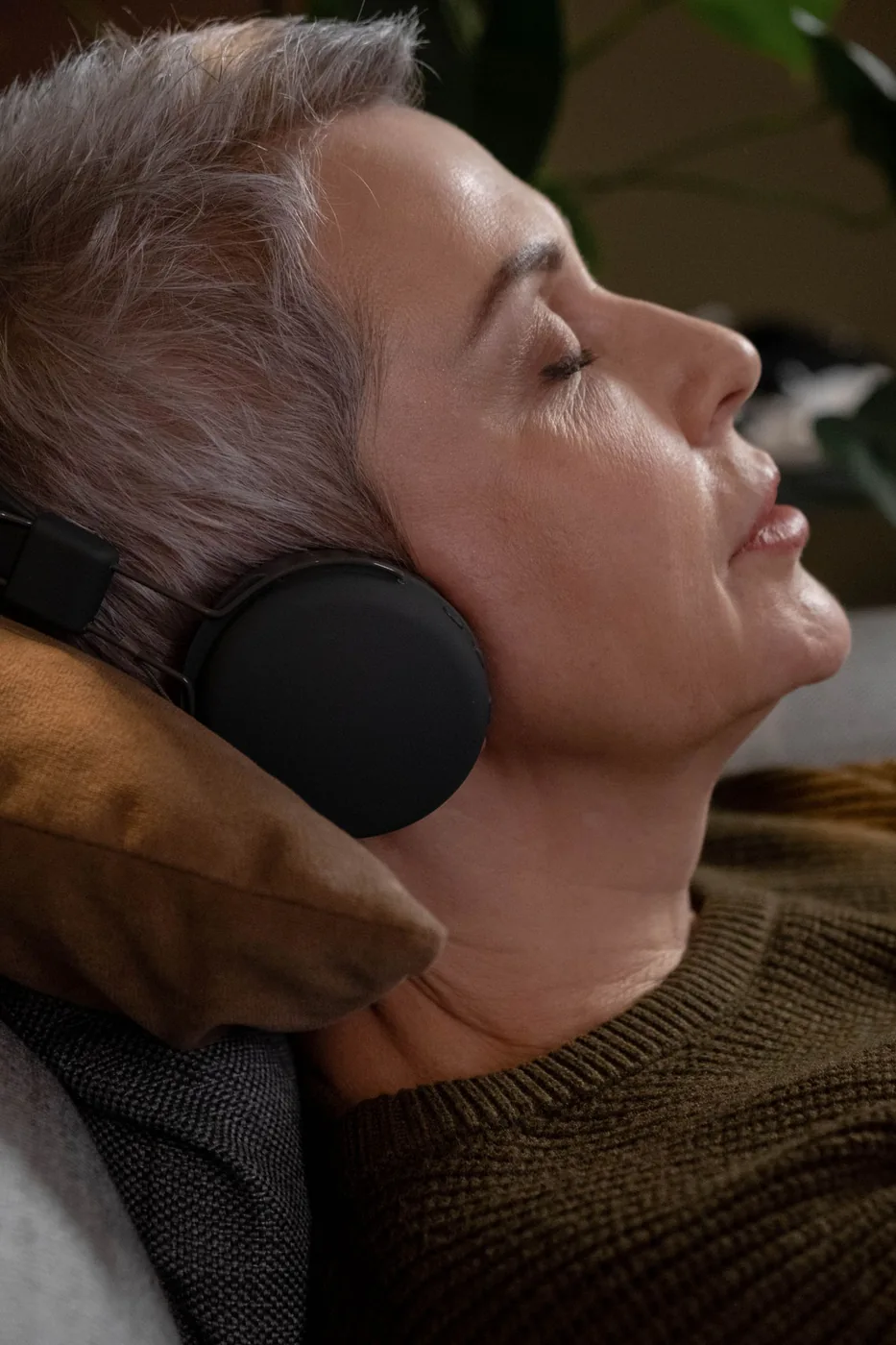
Map the journey before choosing the headphones
Imagine leaving home in a winter coat, walking to a station, spending forty minutes on a train, and finishing with a busy street crossing. One purchase has to move through several different sound environments and fit into the rest of your bag. Write down where you want quiet and where you need to stay engaged with what is around you. Then note whether you wear glasses, carry a hat, or usually take calls. Those details can decide between earbuds and over-ear headphones more effectively than a list of unfamiliar audio technologies.
Choose the shape for the whole trip
Earbuds take less space and are easy to carry in a small coat pocket. Over-ear headphones avoid placing tips in the ear canal but occupy more room when you take them off. A case can protect them inside a bag while making the footprint larger still. Think through buying a coffee, removing a scarf, and boarding a crowded train. If you repeatedly need both hands to manage the headphones, a smaller format may be worth more than another feature. If ear tips bother you, an over-ear format may be a better starting point even with the packing compromise.
Use published features as a shortlist
Sony's WH-1000XM6 specifications list an over-ear design, noise cancellation, ambient sound, and multipoint connection. Bose describes the QuietComfort Ultra Headphones second generation as offering noise cancellation and USB-C audio. These manufacturer statements identify functions to compare; they do not establish which will feel most comfortable or suppress more noise on your route. Use them to shortlist products with the features you need, then inspect fit and controls during the return period. Avoid buying on a maximum battery-life claim alone if the headphone shape or carrying case will make you leave it at home.
Make awareness a deliberate habit
Plan a simple routine for transitions. Pause playback before conversations and remove or adjust headphones when attention to the environment is necessary. An ambient mode can be a useful convenience, but it is not a substitute for looking and listening carefully. Open-ear products may suit quieter walking portions, though they do not solve a noisy carriage in the same way as a sealed design. Choose the main format around the longest or most difficult part of your commute. Resist expecting one listening mode to be ideal for every minute between the front door and your desk.
Treat calls as a separate requirement
If your commute includes a daily catch-up call, microphone behavior matters alongside the sound you hear. Published microphone descriptions cannot tell you exactly how your voice will fare in wind or a particular station. During the return window, make a representative call in an appropriate location and ask whether your voice remains understandable. Check how you mute and how easily a phone call interrupts a laptop connection if you use more than one device. If calls are rare, do not let an elaborate call-feature list outweigh a more comfortable fit or a more manageable carrying size.
Set a budget for the complete commute kit
Include any case, charging cable, replacement tips, or adapter you actually need. Do not automatically upgrade to a flagship because the commute happens every day. A less expensive model with the right shape can still be a worthwhile daily tool. Spend more when a clear function solves a repeated problem, such as switching between a work laptop and personal phone. Save money on aesthetic extras hidden inside a bag. If your current headphones work well except for worn cushions or tips, check whether a supported replacement part can restore their usefulness before replacing the entire product.
Our buying direction for an ordinary week
Compare Sony's WH-1000XM6 and Bose's QuietComfort Ultra line if your priority is an over-ear noise-canceling format for seated travel. Check the exact generation, current listing, dimensions, and included accessories before ordering. For a light bag and frequent short listening sessions, compare compatible earbuds instead of forcing a large headphone into the routine. This guide is based on published features and practical decision-making, not personal commuting tests. Choose one or two deal breakers, assess them during a normal week, and return a poor fit rather than hoping a premium price will make it comfortable.
Where to start looking
These are starting points for comparison, based on manufacturers’ published information. Check the exact version, compatibility, current availability, price, and return terms before ordering. Manufacturer links below are ordinary links unless specifically labeled as affiliate.
Sony WH-1000XM6
A published-feature starting point for over-ear noise cancellation and multi-device use.
The tradeoff: Over-ear size and fit need a real carrying and comfort check.
Manufacturer details ↗Bose QuietComfort Ultra Headphones
Compare the current generation when noise cancellation and an over-ear format are priorities.
The tradeoff: Read the exact generation's listing; similar product names can span different revisions.
Manufacturer details ↗A few things you might be wondering
Are over-ear headphones always better for trains?+
Not for every traveler. Compare carrying space, comfort, and whether you tolerate ear tips before choosing the format.
Does ambient mode mean I can ignore my surroundings?+
No. Pause or remove headphones whenever the situation requires your full attention; a listening mode does not replace awareness.
Sources & editorial notes
Manufacturer and primary-source information checked October 23, 2026. Buying advice reflects our editorial interpretation. Features and regional options can change.
See our editorial policy or request a correction.