The short answer depends on what you carry
Imagine a morning spent moving from a train to a shared desk and then to a lunch walk. You want quieter travel and concentration, but you also keep taking the headphones off. Earbuds usually make a lighter, smaller package; over-ear headphones move the wearing pressure away from the ear canal and take more space. Neither is a universal winner. Choose earbuds when pocketability is the priority and ear tips suit you. Start with over-ear headphones when you dislike in-ear wear and can comfortably accommodate the case in your bag.
Understand what the shared feature does
Apple's AirPods guidance explains active noise cancellation and transparency modes for supported models. Sony lists noise cancellation and ambient sound among the WH-1000XM6's functions. Both formats can therefore offer ways to manage outside sound, but that does not establish equal performance. The fit around or inside the ear remains part of the experience. Treat the manufacturer's feature list as confirmation that a function exists, not proof of how it compares with another device on your route. This is a format decision guide based on published information, not a laboratory ranking of noise reduction.
Award pocketability to earbuds
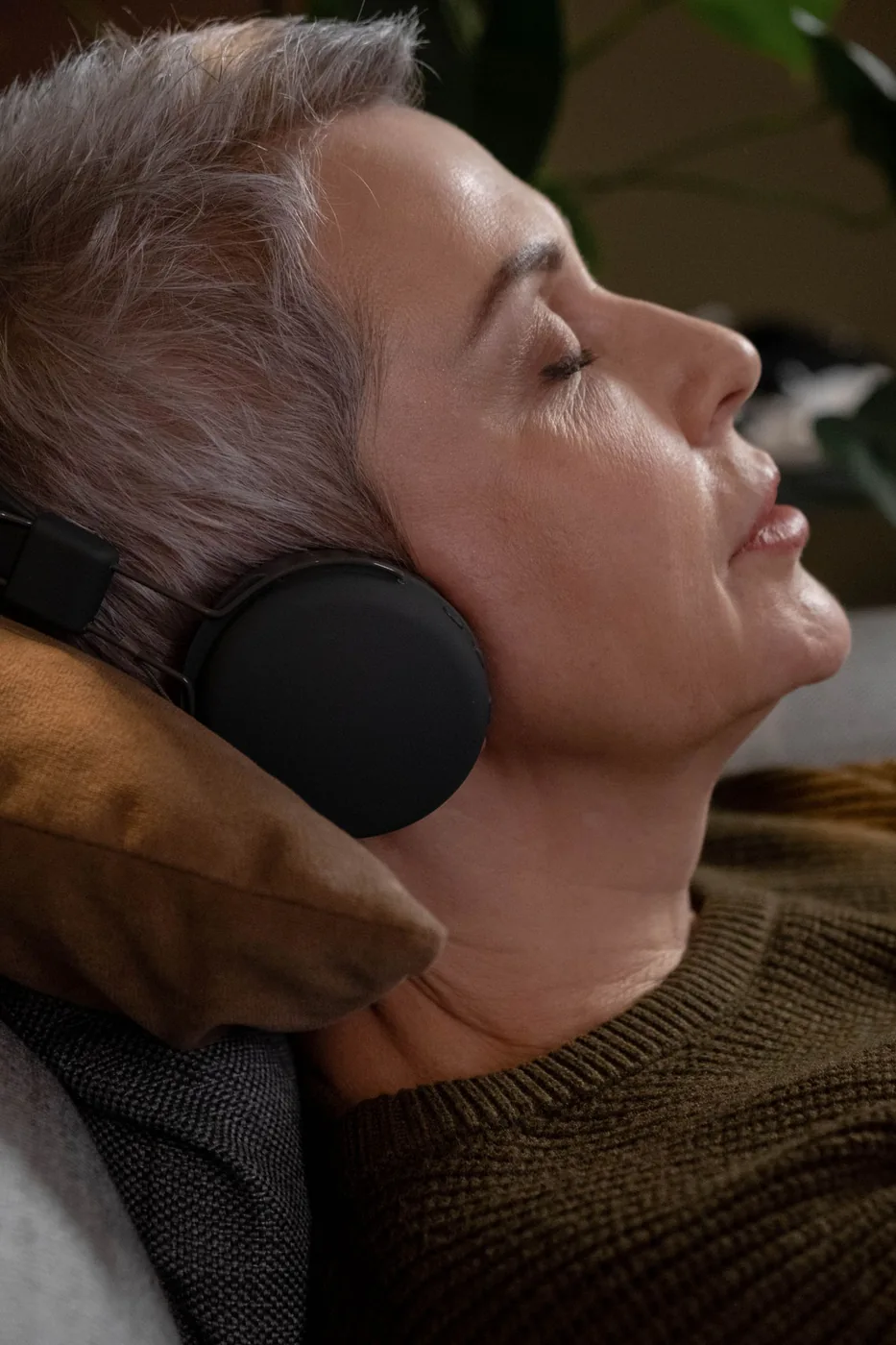
If you carry a small crossbody bag or often leave the house without a backpack, earbud size can settle the decision. Think about where the charging case goes while you use them and whether you can retrieve it before taking both earbuds out. A tiny product can still become inconvenient if the case always ends up at the bottom of the bag. Over-ear headphones need a larger storage plan, especially if you want to protect them rather than place them loose beside keys. Compare the full packed kit, not only the device shown in the main photograph.
Let comfort remain undecided until you try
For one person, ear tips disappear from attention; for another, they become tiring during a long session. Over-ear headphones can also create pressure or warmth, and glasses can change the fit. Product weight and cushion descriptions help narrow the choices without predicting your comfort. Buy from a seller whose return terms let you assess the format sensibly and hygienically. Wear the product during the sort of session you actually have, at a comfortable level, rather than deciding after a minute. A feature-rich model that you keep taking off is poor value for your needs.
Compare the interruptions in your day
Do you frequently speak to colleagues, answer a door, or switch between a computer and phone? Check the actual pause, mute, and device-switching controls on the selected models. Earbuds may be quick to put in a pocket case; over-ear headphones can be easier to take off as a single object. Neither should encourage you to leave loose accessories on a busy café table. Think through the sequence in detail. If you listen for ten minutes at a time, a convenient transition can matter more than a battery maximum designed around a much longer uninterrupted session.
Keep spending proportional to the problem
Begin with a total budget that includes any needed charger, case, or replacement tips and cushions. A previous-generation product can be worth comparing when it meets the same practical requirement, but check condition, support, return terms, and the exact feature set. Do not assume a current premium model is necessary simply because the word flagship appears in reviews. Spend on the feature you can name: a preferred fit, a supported connection, or a control you will use daily. Save on a larger bundle if the additional pieces will remain in a drawer.
Our scenario winners
For a small bag, choose compatible noise-canceling earbuds such as a supported AirPods Pro model after checking your phone and feature requirements. For long seated listening with no wish to wear tips, compare an over-ear option such as Sony's WH-1000XM6. For a day that is mostly conversations and movement in quiet spaces, you may not need noise cancellation at all. Keep the decision tied to the hardest part of your routine. Once you choose the format, compare two or three actual models rather than reopening the entire market every time a sale banner appears.
Where to start looking
These are starting points for comparison, based on manufacturers’ published information. Check the exact version, compatibility, current availability, price, and return terms before ordering. Manufacturer links below are ordinary links unless specifically labeled as affiliate.
Apple AirPods Pro
A starting point for a pocketable noise-canceling format, especially when comparing Apple-device features.
The tradeoff: Confirm which features your phone, software, and selected generation support.
Manufacturer details ↗Sony WH-1000XM6
Compare for an over-ear fit and a single headphone to remove and store.
The tradeoff: Its carrying footprint is larger than an earbud case.
Manufacturer details ↗A few things you might be wondering
Which format cancels more noise?+
This guide does not rank measured cancellation. Compare credible model-specific evidence after choosing a format you can wear comfortably.
Should I own both formats?+
Only if they solve different routines often enough to justify the cost. Start with the one that covers most of your listening.
Sources & editorial notes
Manufacturer and primary-source information checked October 23, 2026. Buying advice reflects our editorial interpretation. Features and regional options can change.
See our editorial policy or request a correction.